
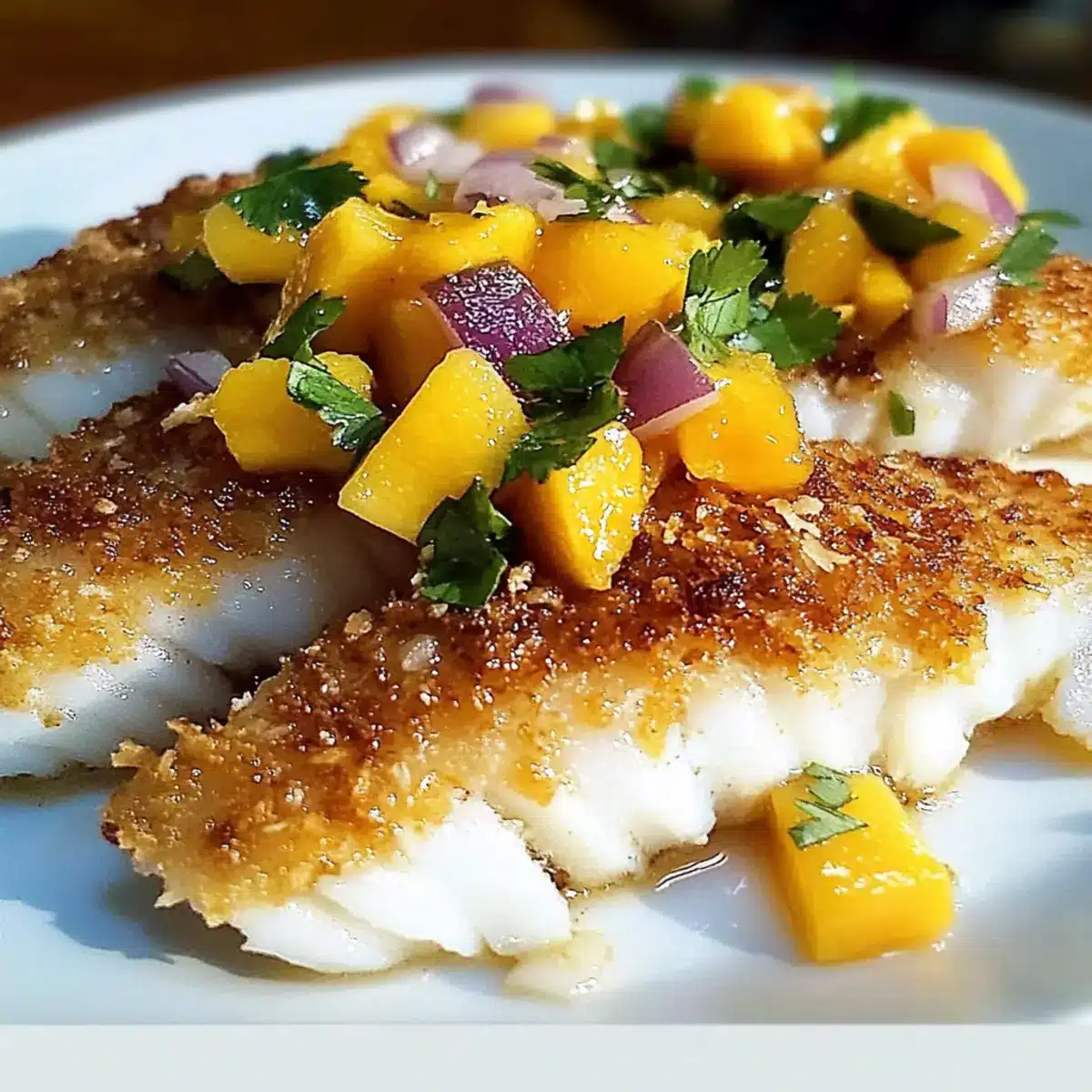
While sipping a piña colada on a sun-soaked beach, I often dream of the flavors that can transport us to tropical paradises right at our dinner table. The Coconut Crusted Fish with Mango Salsa is the perfect way to bring that vacation vibe home, marrying flaky, tender fish with a delightful crunchy coconut coating. Not only is this dish an absolute showstopper for family dinners and gatherings, but it comes together in a snap—making it an ideal choice for busy weeknights. The sweet and zesty mango salsa adds a refreshing contrast that elevates this seafood star, paving the way for endless variations. Can you imagine the joy on your family’s faces as you serve this colorful plate, reminiscent of azure waters? Ready to dive in?
Why is this recipe a must-try?
Simplicity at its finest: With minimal prep and cooking time, you’ll have a stunning meal ready in no time.
Versatile and adaptable: Feel free to swap the fish for your favorite variety or experiment with a mango salsa twist using ingredients like avocado or pineapple.
Health-conscious: This dish is not only delicious but packed with protein and omega-3 fatty acids when using fatty fish like salmon, making it a smart choice for family dinners.
Crowd-pleaser: Perfect for impressing guests or enjoying a casual meal at home, everyone will be raving about this tropical dish!
Don’t forget to pair it with some delicious Coconut Lime Fish or serve alongside a refreshing salad to complete your meal.
Coconut Crusted Fish Ingredients
• Discover the essential components for a tropical delight!
For the Fish
- Fresh Fish Fillets – Use tilapia or cod as your base; salmon works perfectly too for a richer flavor.
- Salt – Enhances the overall taste, bringing out the fish’s natural flavors.
- Black Pepper – Adds a subtle warmth; freshly ground is best for improved flavor.
For the Coconut Coating
- Shredded Coconut – 1 cup adds a delightful crunch; panko breadcrumbs can replace it for a different texture.
- Breadcrumbs – ½ cup helps create a sturdy crust; try gluten-free options if needed.
- Garlic Powder – 1 teaspoon introduces an aromatic essence to the blend.
- Paprika – 1 teaspoon not only adds warm color but enhances flavor depth.
- Eggs – 2 large, beaten, acting as a binder that helps the coating adhere nicely to the fish.
- All-Purpose Flour – ¼ cup is for dredging, which locks in moisture and supports the coating.
For the Mango Salsa
- Ripe Mango – 1 diced contributes vibrant color and natural sweetness to the fresh salsa; this mango is the star!
- Red Onion – ½ cup, finely chopped brings a delightful crunch and flavor contrast that complements the sweetness of mango.
- Red Bell Pepper – 1 medium, diced, adds sweetness and eye-catching color to your salsa.
- Jalapeño – 1 medium, seeded and minced introduces a touch of heat; adjust to suit your spice preference.
- Lime – Juice of 1 brightens and enhances the flavors, making the salsa sing!
This Coconut Crusted Fish with Mango will be sure to make a lasting impression at your next dinner!
Step‑by‑Step Instructions for Coconut Crusted Fish with Mango
Step 1: Prepare the Coating
In a shallow dish, combine 1 cup of shredded coconut, ½ cup of breadcrumbs, 1 teaspoon of salt, ½ teaspoon of black pepper, 1 teaspoon of garlic powder, and 1 teaspoon of paprika. Stir thoroughly until evenly mixed. This coconut crust mixture should look inviting, with the shredded coconut and breadcrumbs evenly blended, ready to coat the fish.
Step 2: Set Up the Dredging Station
In a separate bowl, beat together 2 large eggs until frothy. Next, place ¼ cup of all-purpose flour in another shallow dish. This setup will facilitate easy dredging; each fish fillet will pass through the flour, egg, and finally into the coconut mixture, ensuring a solid and delicious crust.
Step 3: Coat the Fish
Take each fish fillet (tilapia or cod work well), and dredge it in the flour, shaking off any excess. Next, dip it into the beaten eggs, ensuring it is well-coated. Finally, press the fillet firmly into the coconut mixture, covering it completely. The Coconut Crusted Fish should now be visually appealing, with a thick layer of the crust clinging to the fish.
Step 4: Heat the Oil
In a large skillet, pour in enough oil to cover the bottom, about 1/4 inch deep, and heat over medium heat. To check if the oil is ready, drop in a small piece of fish; it should sizzle immediately. The oil should maintain a constant temperature for frying to ensure a crispy texture and to prevent greasy fish.
Step 5: Fry the Fish
Carefully add the coated fish fillets to the hot oil without overcrowding the pan. Cook for about 4-5 minutes on each side, until the crust is golden brown and crispy. Keep an eye on the color; it should develop a beautiful golden hue, indicating that your Coconut Crusted Fish is cooking to perfection.
Step 6: Drain Excess Oil
Once the fish is cooked, use a slotted spatula to transfer the fillets to a plate lined with paper towels. Let them rest for a couple of minutes to allow any excess oil to drain. This step is crucial for maintaining the crispy texture of the coconut crust while ensuring the fish stays moist inside.
Step 7: Make the Mango Salsa
In a medium bowl, mix together 1 diced ripe mango, ½ cup finely chopped red onion, 1 diced red bell pepper, and 1 minced jalapeño. Drizzle with the juice of 1 lime and season with salt to taste. Gently toss until all the ingredients are well combined. This fresh mango salsa adds a vibrant pop of color and flavor, perfectly complementing the Coconut Crusted Fish.
Step 8: Serve
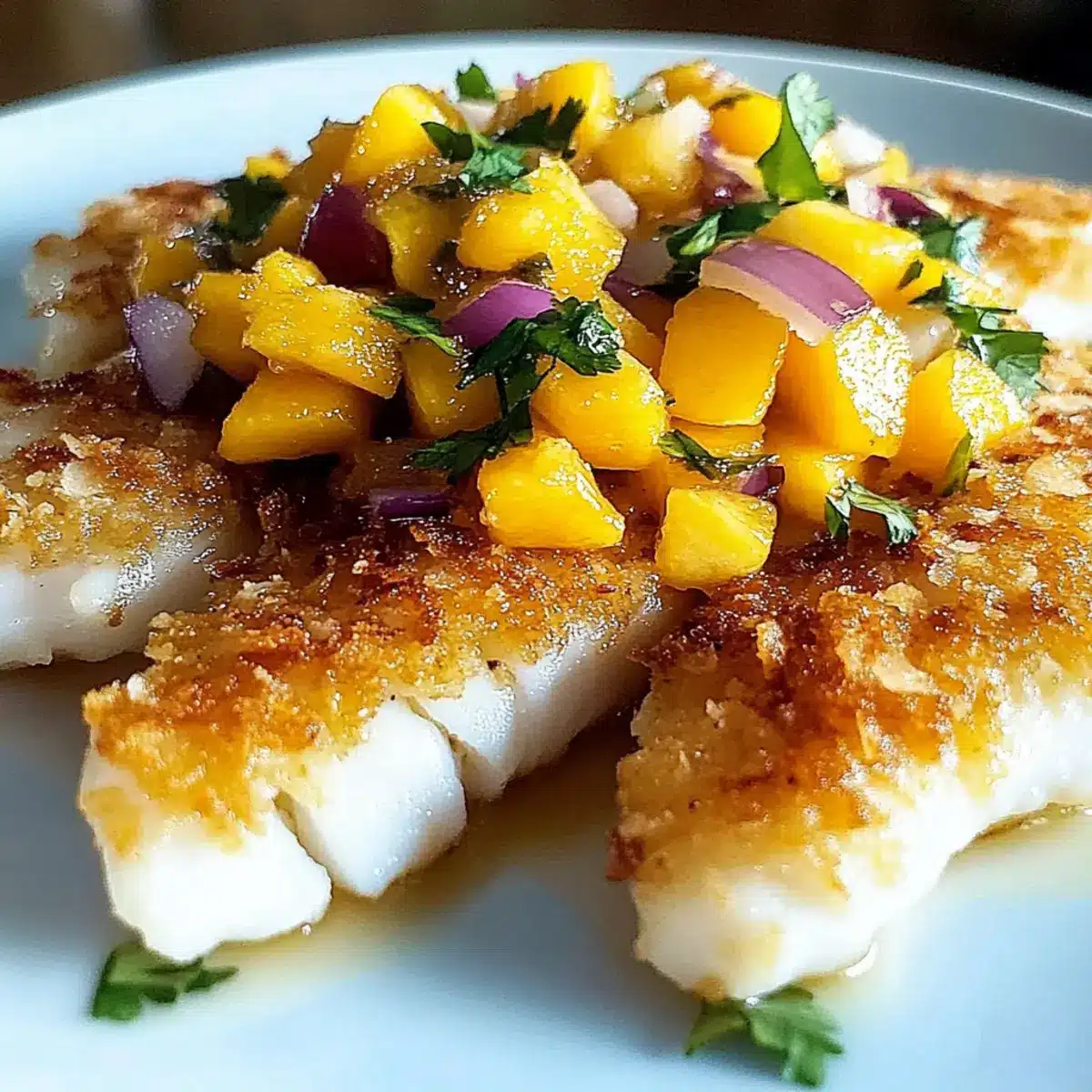
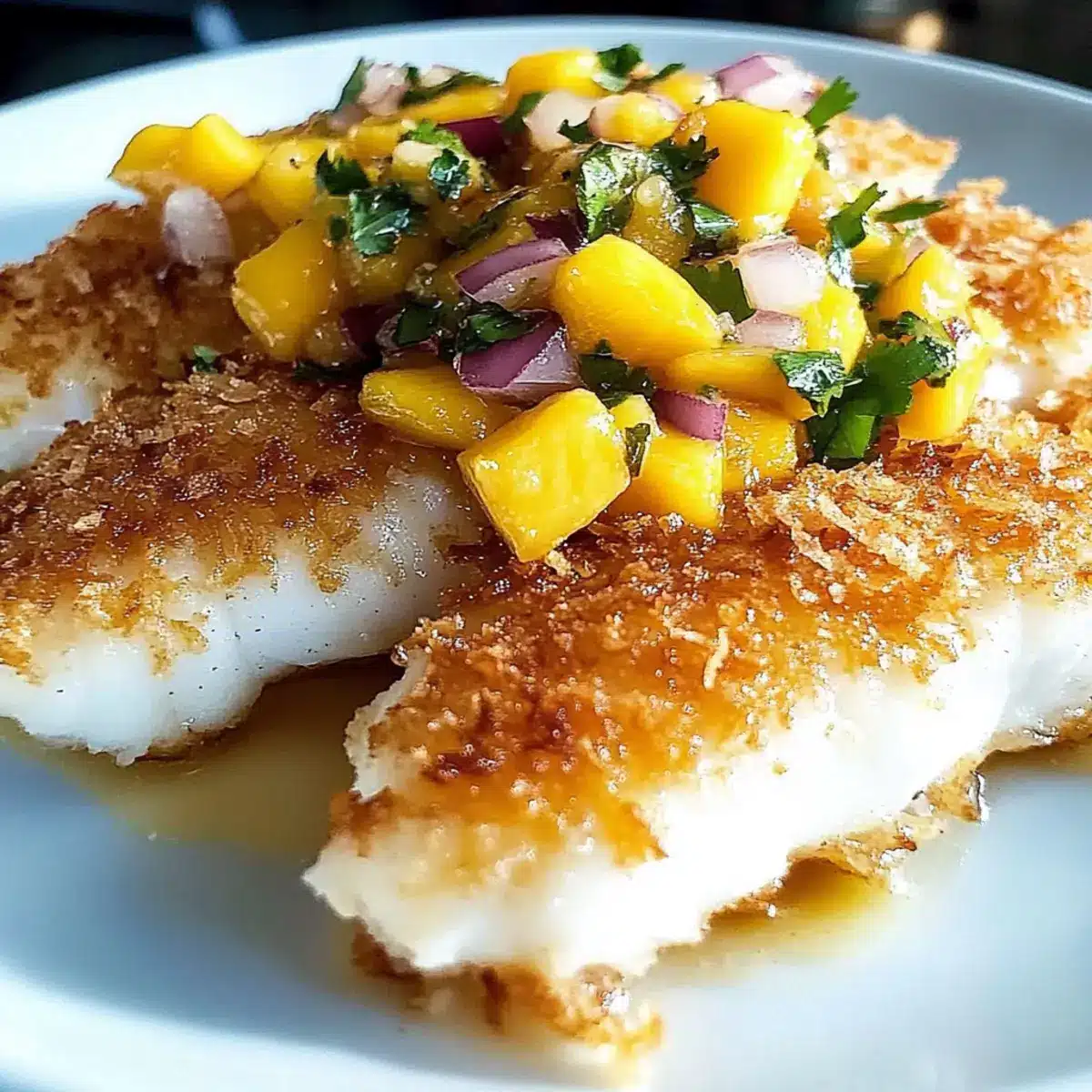
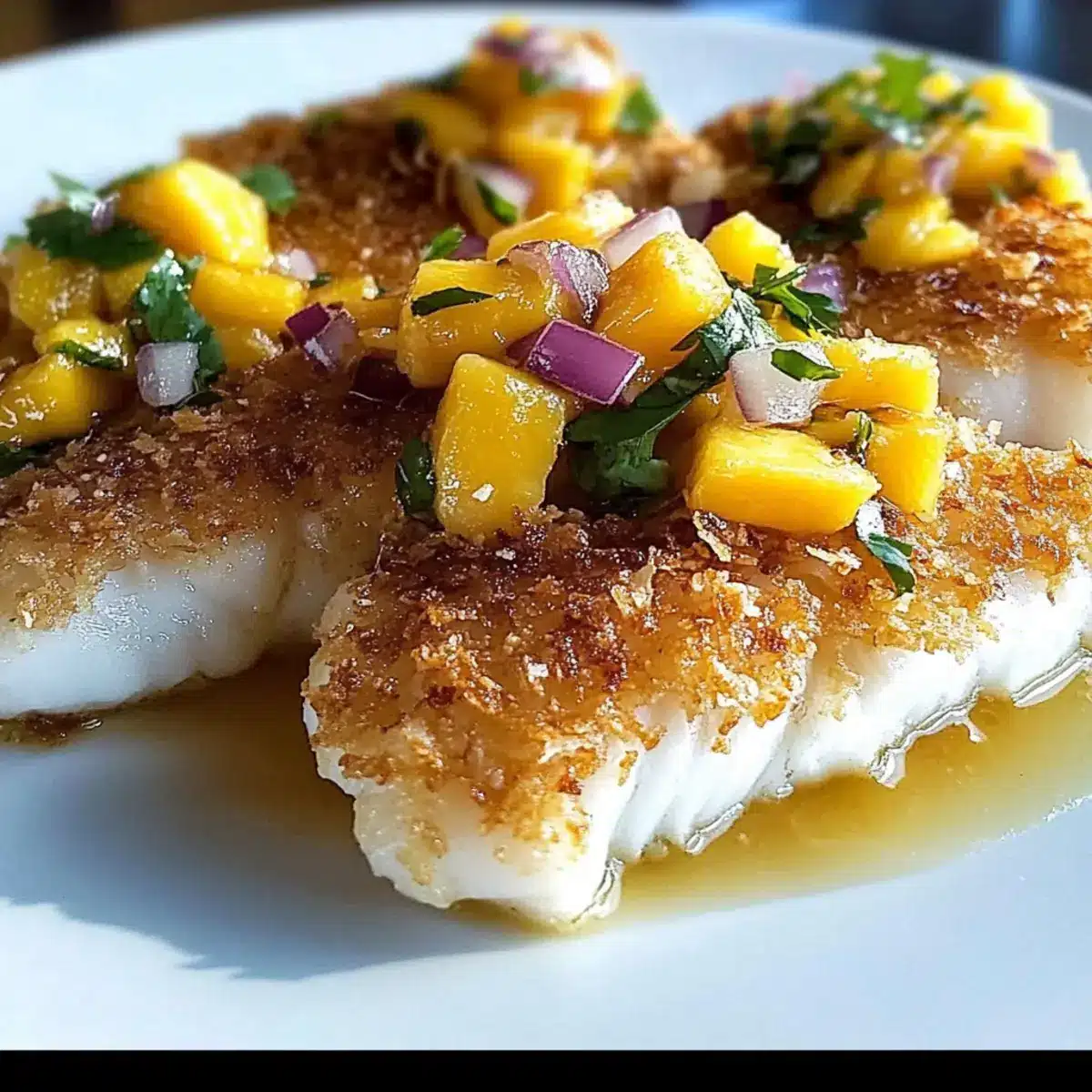
Serve the luscious Coconut Crusted Fish immediately, topped generously with the freshly made mango salsa. For an added touch, consider garnishing with lime wedges and fresh cilantro. This beautiful dish not only looks appealing but offers a delightful balance of textures and flavors, bringing a taste of the tropics to your table.
Make Ahead Options
These Coconut Crusted Fish with Mango Salsa are perfect for meal prep enthusiasts! You can prepare the mango salsa up to 24 hours in advance, as allowing the flavors to meld enhances its taste. Simply mix the diced mango, red onion, bell pepper, jalapeño, and lime juice, seasoning to taste, and refrigerate in an airtight container. When you’re ready to serve, simply cook the fish, which can be coated in the coconut mixture and stored in the refrigerator for up to 3 hours before frying. To maintain quality, ensure the fish is well-covered to prevent drying out. When it’s time to eat, fry the fish until golden and serve immediately topped with your fresh salsa for a delicious tropical treat!
How to Store and Freeze Coconut Crusted Fish
Fridge: Store any leftover Coconut Crusted Fish in an airtight container in the fridge for up to 3 days. To maintain its crispy texture, reheat in an oven.
Freezer: Freeze the cooked fish wrapped tightly in plastic wrap and aluminum foil for up to 2 months. Reheat from frozen in a preheated oven at 375°F (190°C) until heated through.
Mango Salsa: Store leftover mango salsa in an airtight container in the fridge for up to 2 days. To enjoy its freshest flavors, prepare it just before serving, but it can be made ahead.
Reheating: For best results, reheat the fish in the oven or air fryer rather than the microwave to preserve its crispiness. Enjoy!
Expert Tips for Coconut Crusted Fish
-
Oil Temperature Matters: Ensure the oil is hot enough by testing with a small piece of fish. If it sizzles, you’re good to go!
-
Don’t Overcrowd the Pan: Fry in batches if necessary. Overcrowding can lower the oil temperature, resulting in soggy, greasy Coconut Crusted Fish.
-
Crispy Finish: Let the cooked fish rest on paper towels for a minute to absorb excess oil; this keeps the crust crunchy and the fish moist.
-
Prep Mango Salsa Ahead: Make the salsa a few hours in advance for optimal flavor blending, but serve it fresh for the best texture alongside your Coconut Crusted Fish.
-
Experiment with Fish: Don’t hesitate to switch up the fish varieties; tilapia, cod, or salmon all work beautifully and ensure a delicious meal every time!
What to Serve with Coconut Crusted Fish with Mango Salsa
The vibrant flavors of this dish call for delightful companions that enhance your tropical dinner experience.
- Coconut Rice: This fluffy, creamy side complements the fish beautifully, providing a rich texture that matches the crunchy coconut crust.
- Grilled Vegetables: A medley of zucchini, bell peppers, and asparagus brings a smoky char that balances the sweetness of the mango salsa. Vibrant veggies are not just pleasing to the eye; they add a delightful crunch.
- Light Salad: A refreshing green salad with cucumber and avocado tossed in a citrus vinaigrette offers a crisp contrast to the warm fish. The acidity of the vinaigrette elevates the overall meal!
- Roasted Sweet Potatoes: Their natural sweetness pairs superbly with the tropical elements, creating a harmonious blend of flavors. Plus, the creamy texture balances the crunchiness of the fish.
- Tropical Fruit Salad: A mixture of pineapple, kiwi, and papaya is refreshing and enhances the tropical theme, delighting your taste buds while cleansing your palate.
- Sparkling Water with Lime: A refreshing drink option that complements the dish without overpowering it. The fizzy bubbles and zesty lime add a fun touch!
Coconut Crusted Fish with Mango Variations
Feel free to customize your Coconut Crusted Fish with Mango to match your taste and pantry essentials—let your creativity shine!
-
Different Fish: Swap in salmon or halibut for a richer flavor. Each type of fish brings a unique personality to this tropical dish, making it your own.
-
Panko Crust: Replace shredded coconut with panko breadcrumbs for an extra crunch. The texture change can create an exciting variation while keeping that beloved crispy exterior.
-
Spicy Twist: Increase jalapeño in the salsa for a fiery kick. It’s a delightful way to add some heat and impress those who love a zesty bite.
-
Salsa Alternatives: Experiment with diced avocado or pineapple in your mango salsa. This adds unexpected layers of creaminess or sweetness to your dish, creating a refreshing surprise with every bite.
-
Herb Infusion: Toss in fresh cilantro or mint to your mango salsa for a fragrant touch. Fresh herbs elevate the dish’s brightness and provide an aromatic finish.
-
Coconut Rice: Serve your coconut crusted fish on a bed of coconut rice instead of regular rice. The added flavor complements the dish beautifully, enhancing your tropical experience.
-
Double the Mango: Use two diced mangoes for a sweeter, fruitier salsa. This change will intensify the dish’s tropical vibes, making it even more vibrant!
-
Gluten-Free Option: Replace breadcrumbs with gluten-free options for a delicious gluten-free meal. Enjoy the same great taste without sacrificing accessibility!
For more exciting taste inspirations, check out our Pumpkin Cupcakes Deliciously or try pairing this dish with Garlic Butter Beef Bites with Potatoes for a well-rounded dinner experience. Celebrate the joy of cooking at home and delight your family with these flavorful variations!
Coconut Crusted Fish with Mango Salsa Recipe FAQs
How do I select the best fish for this dish?
Absolutely! When choosing fish, opt for fresh fillets that are firm and have no dark spots. Tilapia and cod are great options, but salmon, snapper, or halibut can bring unique flavors. Look for fish with a clean smell and vibrant color to ensure freshness!
What’s the best way to store leftovers of Coconut Crusted Fish?
If you have any leftover Coconut Crusted Fish, store it in an airtight container in the fridge for up to 3 days. To help maintain its crispy texture, reheat it in an oven at 375°F (190°C) for about 10-15 minutes instead of using a microwave.
Can I freeze the Coconut Crusted Fish?
Certainly! To freeze the cooked fish, wrap it tightly in plastic wrap and then in aluminum foil to prevent freezer burn. It will keep well in the freezer for up to 2 months. When you’re ready to enjoy it, reheat directly from frozen in a preheated oven at 375°F (190°C) until heated through and crispy again.
How can I troubleshoot if my coconut crust is not sticking to the fish?
Very easily! If you find that the coconut crust isn’t adhering as expected, ensure that the fish fillet is well-coated in the flour and egg mixture before pressing into the coconut blend. Additionally, gently pressing the coconut onto the fish can help secure it better. If the crust still doesn’t stick, try letting the coated fish rest for a few minutes before frying, which can help the coating set up nicely.
Are there any dietary considerations I should be aware of?
Yes! This Coconut Crusted Fish is generally family-friendly, but it’s worth noting if you have any allergies. The dish contains eggs and can be made gluten-free by substituting standard breadcrumbs with gluten-free options. Always check the ingredients in the mango salsa, particularly the jalapeño and any added flavors, to ensure they fit any dietary restrictions.
How long can I keep mango salsa in the fridge?
The mango salsa can be stored in an airtight container in the fridge for up to 2 days. While it’s best enjoyed fresh to capture the vibrant flavors and textures, prepping it a few hours ahead can enhance the flavor melding. Just remember to give it a gentle toss before serving!
Coconut Crusted Fish with Mango: A Tropical Delight at Home
Ingredients
Equipment
Method
- In a shallow dish, combine shredded coconut, breadcrumbs, salt, black pepper, garlic powder, and paprika. Stir thoroughly until evenly mixed.
- In a separate bowl, beat together the eggs. Place flour in another shallow dish.
- Dredge each fish fillet in the flour, dip into beaten eggs, then press into the coconut mixture.
- Heat oil in a large skillet over medium heat. Drop in a small piece of fish to test the oil.
- Carefully add the coated fish and cook for about 4-5 minutes on each side until golden brown.
- Use a slotted spatula to transfer cooked fillets to paper towels to drain excess oil.
- In a bowl, combine diced mango, chopped red onion, diced bell pepper, minced jalapeño, lime juice, and salt to make the salsa.
- Serve the Coconut Crusted Fish topped with mango salsa, garnished with lime wedges and fresh cilantro.
Leave a Reply